
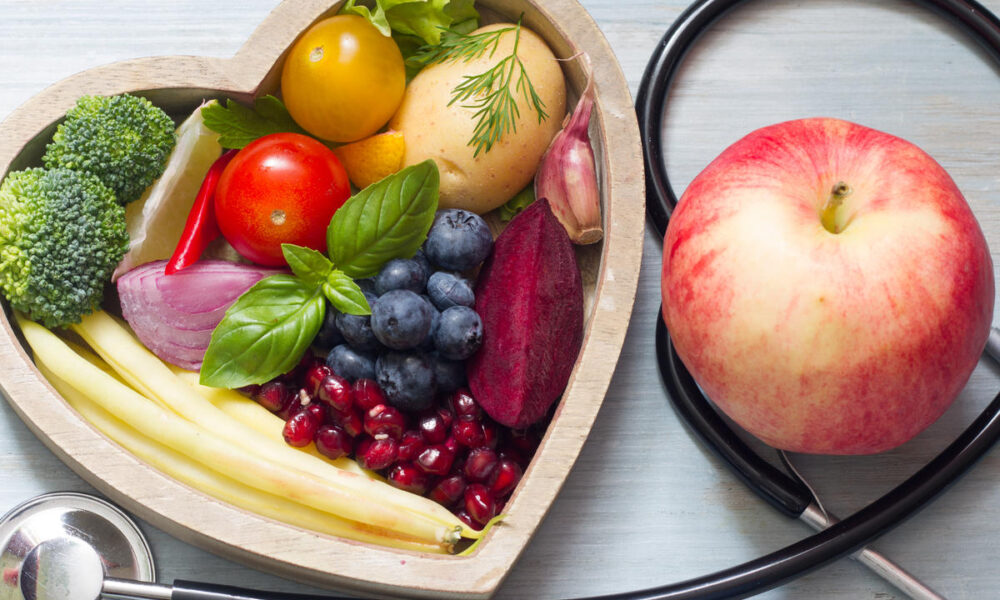
Impact of diet on our body
What kind of diet we should eat.
China Study, a 20-year partnership of Cornell University, Oxford University, and the Chinese Academy of Preventive Medicine that showed high consumption of animal-based foods is associated with more chronic diseases like heart disease, diabetes, cancer, while those who ate primarily a plant-based diet were the healthiest.
The China Study examines the link between the consumption of animal products (including dairy) and chronic illnesses such as coronary heart disease, diabetes, breast cancer, prostate cancer, and bowel cancer. The authors conclude that people who eat a predominantly whole-food, vegan diet—avoid animal products as the main source of nutrition, including beef, pork, poultry, fish, eggs, cheese, and milk, and reduce their intake of processed foods and refined carbohydrates—will escape, reduce, or reverse the development of numerous diseases. They write that “eating foods that contain any cholesterol above 0 mg is unhealthy.
The study concluded that countries with high consumption of animal-based foods in 1983–84 were more likely to have had higher death rates from “Western” diseases as of 1973–75, while the opposite was true for counties that ate more plant-based foods.
“Eat more fruits and vegetables” is timeless advice that has the backing of a large body of evidence. Vegetables and fruits provide fiber, slowly digested carbohydrates, vitamins and minerals, and numerous phytonutrients that have been associated with protection against cardiovascular disease, aging-related vision loss due to cataract and macular degeneration, and maintenance of bowel function. The connection between vegetables and fruits and cancer is less well established. Although they do not have a blanket anticancer effect, fruits and vegetables may work against specific cancers, including esophageal, stomach, lung, and colorectal cancer.
The idea is that we should be consuming whole foods. We should not be relying on the idea that genes are determinants of our health. We should not be relying on the idea that nutrient supplementation is the way to get nutrition because it’s not. I’m talking about whole, plant-based foods. The effect it produces is broad for the treatment and prevention of a wide variety of ailments, from cancer to heart disease to diabetes.
Highly refined grains cause a more rapid and a greater overall increase in blood sugar than less-refined whole grains. The harmful effects of consuming wheat flour are that it raises the cholesterol level, clogs the arteries, disrupts the blood sugar level, causes mood swings and irritability, and increases your cravings for more food. It also causes a fatty liver, high blood pressure, and atherosclerosis.
Two problematic beverages are sugar-sweetened drinks (sodas, fruit drinks, juices, sports drinks, etc.) and alcoholic drinks. Not surprisingly, daily consumption of sugary beverages has been associated with weight gain and increased risk of type 2 diabetes, heart disease, and gout.
Effect of junk food on health
Essentially any food that is highly processed, high in calories and low in nutrients is called Junk food
We have heard the GIGO principle in a computer that is Garbage in Garbage out same is the effect of junk food on our body.
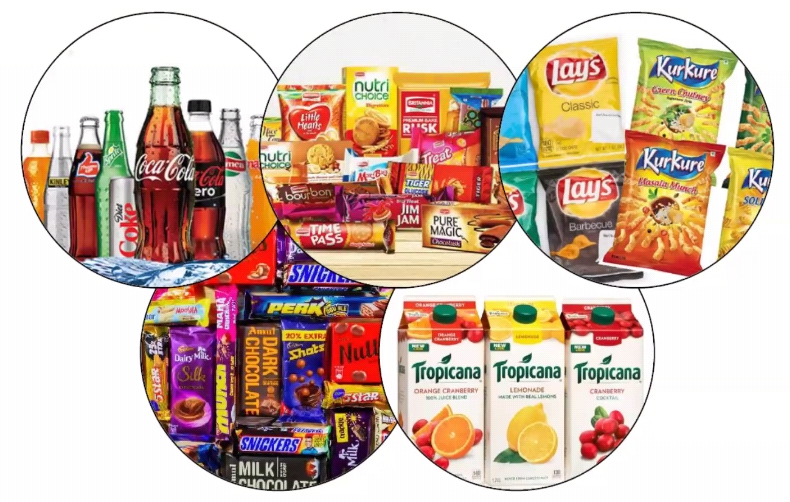
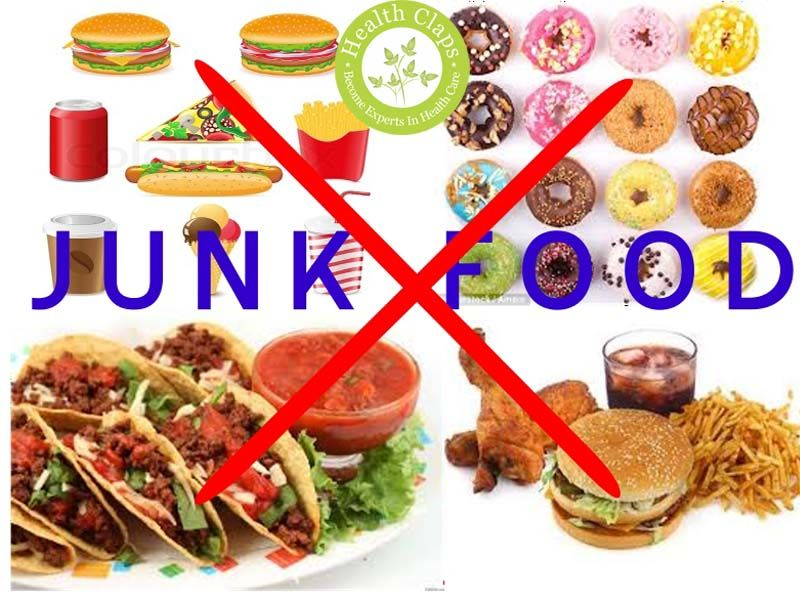
junk food is defined as “those commercial products, including candy, bakery goods, ice cream, salty snacks, and soft drinks, which have little or no nutritional value but do have plenty of calories, salt, and fats. Also, white bread, crackers, cake, candy, ice cream soda, chocolate malted, sundaes, sweetened carbonated beverages, Fried food, Burger, Pizza all fall in the junk food category.
Junk food provides empty calories, supplying little or none of the protein, vitamins, or minerals required for a nutritious diet.
When junk food is consumed very often, the excess fat, simple carbohydrates, and processed sugar found in junk food contribute to a higher risk of obesity, depression, digestive issues, heart disease, and stroke, type 2 diabetes, cancer, and early death. Studies reveal that as early as the age of 30, arteries could begin clogging and lay the groundwork for future heart attacks. Junk food consumption is also linked to obesity in children
Effect of healthy food on health
A healthy diet rich in fruits, vegetables, whole grains, and low-fat dairy products like milk and curd.
Physical Benefits
Eating healthfully allows your body to function better. When you eat healthfully, you feel more awake. You have more energy to spare because your body isn’t trying to run on sugar and fat. Eating a healthy mix of grains, fruits, vegetables, dairy, and protein gives your body all of the nutrients it needs.
Eating fruits and vegetables is also believed to reduce your risk for certain cardiovascular diseases, stroke, type 2 diabetes, and cancer. With a healthy diet, your body physically functions better.
Mental Benefits
The physical benefits aren’t the only positive effects of healthy eating, there are mental benefits as well. When your body is functioning at its best, not only do you feel more awake, but you are also more focused. Your focus can then bring you to do any number of activities. The more focused you are, the more you can get done.
Eating healthfully can also boost your mood and lower your stress levels. Your mental health is much more stimulated with your body fulfilled and running smoothly.
Benefits for Adults
Eating healthfully and finishing your vegetables shouldn’t just be something a mom tells her children, it’s a lesson everyone can practice. As an adult, it’s important to get all of the vitamins and nutrients your body craves, even if you are done growing. The USFDA recommends adults should get two to three servings of fruits and vegetables a day. Eating healthfully as an adult is increasingly important as your body begins to age. Your body craves healthy food to continue functioning properly and staying in a youthful condition.
Benefits for Kids
For children, the eating habits they develop in childhood will often stick with them into adulthood. It is important to teach children about healthy eating so they can become healthy adults. A child who eats healthfully is more awake and alert, allowing him to succeed in the classroom as well. Children with poor meals also are more likely to develop weight problems. Children who eat healthfully can avoid these weight problems and have the opportunity to become more active. The same physical and mental benefits are present for both kids and adults when it comes to healthy eating.
In the long run Over the course of your life, the benefits of a consistently healthy diet really add up. You are less likely to develop cancer, arthritis, memory loss, dementia, and macular degeneration. You’re at a reduced risk of getting heart attacks, blood clots, sustaining falls and fractures, getting diabetes, and having nutritional deficiencies that otherwise become more difficult to treat as you age. You’re also likely to live longer and to be happier and more active than people who have eaten a less healthy diet.
Examples of healthy food and its benefit on health
Benefits of Healthy eating
- Diabetes Management and Prevention
Some foods can be considered “diabetes superfoods.” This is because they are rich in important vitamins and minerals, along with fiber, and have a minimal effect on blood sugar levels. The American Diabetes Association lists their top 10 superfoods as:
Beans,berries, citrus fruits, dark green, leafy vegetables, fat-free dairy, such as skimmed milk and yogurt, fish, not fried, nuts and seeds, sweet potatoes,tomatoes, whole grains and apart from this fruits, vegetables, lean meat, and poultry, avocadoes also recommended
- Prevention of obesity and Weight Gain
A healthy diet is extremely useful in the prevention of obesity and weight gain. This includes more consumption of salads and fruits, Skimmed milk and Curd, Fish, Lean Meat, Boiled Vegetables, and Pulses.
- Prevention of cancer
Many phytochemicals found in fruits, vegetables, nuts, and legumes act as antioxidants, which protect cells from damage that can cause cancer. Some of these antioxidants include beta-carotene, lycopene, and vitamins A, C, and E. Carrots are a rich source of beta carotene and Vitamin A, Lycopene is found in abundant quantity in Tomato and Vitamin E in Nuts.
- Prevention of heart disease and stroke
3-4 servings of fruits and salads, Skimmed milk, Almonds and Walnuts, Fish are found to be good in the prevention of heart disease and stroke.
- Strong bones and teeth
A diet with adequate calcium and magnesium is necessary for strong bones and teeth. Keeping the bones healthy is vital in preventing osteoporosis and osteoarthritis later in life food rich in Calcium and Magnesium are
Dairy products like Milk and Curd, Green leafy vegetables, Broccoli, Cabbage, Cauliflower, Legumes.
10 minutes of sunbath every day is very important as sunlight is a rich source of Vitamin D
- Improve memory
A healthy diet improves memory, Prevents Dementia and cognitive decline. A diet rich in Vitamin C, E, Omega-3 Fatty acids is Fish, almonds, peanuts, hazelnuts, sunflower seeds, green vegetables.
- Better Gut health
Diet rich in vegetables, fruits, legumes, and whole grains provides a combination of prebiotics and probiotics that help good bacteria to thrive in the colon.
Fiber is an easily accessible prebiotic, and it is abundant in legumes, grains, fruits, and vegetables. Fiber also promotes regular bowel movements, which can help to prevent bowel cancer and diverticulitis.
- Improves mood
Emerging evidence suggests a close relationship between diet and mood. In 2016, researchers found that a diet with a high glycemic load may cause increased symptoms of depression and fatigue. A diet with a high glycemic load includes many refined carbohydrates, such as those found in soft drinks, cakes, white bread, and biscuits.
Vegetables, whole fruit, and whole grains have a lower glycemic load found to improve overall mood and sleep.
Diet Pyramid
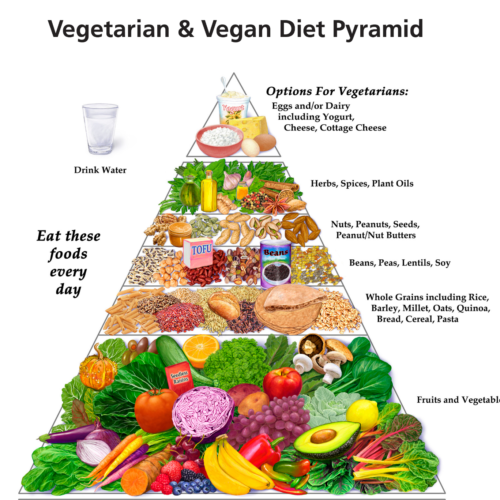
Many different cultures around the world, especially in Latin America, the Mediterranean, Africa, India, Japan, and China rely on vegetables, fruits, nuts, seeds, whole grains, legumes, herbs, and spices to bring great flavors, colors, and sound nutrition to their daily meals. Health professionals encourage everyone to boost consumption of these delicious plant-based foods, and there are a lot of ways to go about doing that.
Here’s a quick look at several popular, healthful diets that all focus on increasing the number of plant foods you eat every day. Which plant-based diet is right for you?
- Semi-Vegetarian or Flexitarian Includes dairy foods, eggs, and small amounts of meat, poultry, fish, and seafood.
- Pescatarian Includes dairy foods, eggs, fish, and seafood, but no meat or poultry.
- Vegetarian (also known as Lacto-Ovo Vegetarian) Includes dairy foods and eggs, but no meat, poultry, fish, or seafood.
- Vegan Includes no animal foods.
Clinical evidence of food on health
Whole grains linked with lower risk of liver cancer
Hepatocellular carcinoma is the most common form of liver cancer. In this study of 125,455 adults in the U.S., eating more whole grains was linked with a significantly lower risk of developing hepatocellular carcinoma over the 24-year study period. The results were statistically significant for whole grains overall and were not statistically significant when looking at bran intake, germ intake, or fiber from whole grains, thus indicating that the whole grain is greater than the sum of its parts.
JAMA Oncology. 2019 Jun 1;5(6):879-886. DOI: 10.1001/jamaoncol.2018.7159. (Yang Y et al.)
Less processed whole-grain foods linked with better blood sugar control in people with diabetes
Replacing refined grains (like white bread or white rice) with whole grains (like whole-grain bread or brown rice) is a simple swap that can yield measurable health benefits. But what if you are already eating whole grains and are ready to take the next step? In this study, researchers randomly assigned 63 adults in New Zealand with type 2 diabetes to a diet with either intact, minimally processed grain foods (whole oats, brown rice, whole-wheat bread made with coarse whole grains) or more processed, finely milled whole grains (instant oats, brown rice pasta, whole grain bread made of finely milled flour). Those in the less processed group had a significantly lower post-meal blood sugar response and lower blood sugar variability throughout the day, indicating better blood sugar control.
Diabetes Care. 2020 May; dc200263. doi:10.2337/dc20-0263.(Åberg S et al.)
Mediterranean diet linked with better brain function in men with heart disease
The Mediterranean diet is well-known for its links to brain health, and new research demonstrates that these ties hold up in populations with heart disease as well. In this study, researchers analyzed the diets of 200 men (average age 57), then assessed their brain health 14 and 20 years later. Not following a Mediterranean Diet was linked with a greater decline in overall cognitive performance and visual-spatial functions.
Nutritional Neuroscience. 2020 Jan 22:1-9. DOI: 10.1080/1028415X.2020.1715049. (Lutski M et al.)
Ultra-processed foods linked with a higher risk of type 2 diabetes
When in doubt, choosing foods that are less processed and closer to nature is a good step towards eating a healthier diet. In this study, researchers analyzed the eating habits of 104,707 adults. Eating 10% more ultra-processed foods (classified using the NOVA system) was linked with a 15% increase in the risk of type 2 diabetes.
JAMA Internal Medicine. 2019 Dec 16. DOI: 10.1001/jamainternmed.2019.5942. [Epub ahead of print] (Srour B et al.)
Eating a plant-based diet for 5 weeks can lower 10-year heart disease risk
Lifestyle changes can have a measurable impact on health, even after a short period of time. In this study, 36 African American participants in Chicago ate a completely plant-based diet for 5 weeks and had their heart disease (specifically, atherosclerotic cardiovascular disease) 10-year risk scores calculated both before and after the study. After eating the plant-based diet, the 10-year heart disease risk was reduced by 19.4%, “bad” LDL cholesterol was lowered by 14%, and their systolic blood pressure (the top number in a blood pressure reading) was lowered by 10 mm Hg.
Circulation. 2019 Nov 11;140:A16318 (Fugar S et al.)
Vegetarian diet pattern related to decreased risk of cancer, heart disease, and death
Research from Loma Linda University on a large cohort of Seventh-Day Adventists suggests that there is a significantly decreased risk of colon and prostate cancers, ischemic heart disease, and all-cause mortality among vegetarians when compared with omnivores. Vegetarians were also found to have lower risks of obesity, hypertension, diabetes, and arthritis. The author notes, however, that these effects cannot be ascribed only to the absence of meat. For this reason, further research into individual food groups and nutrients – especially with regard to specific cancers – is needed.
American Journal of Clinical Nutrition. 1999 Sep 1;70(suppl):532S-8S. (Fraser)
Poor diet linked with 1/3 of all new colorectal cancer cases
Eating a healthy diet can help protect our health from a number of conditions and complications, so researchers wonder how the diet might relate to cancer risk. In this study, researchers used models and dietary data to analyze the cancer cases from 2015. They found that 5.2% of all new cancer cases in 2015 could be attributed to poor diet, with 1.8% attributable to low whole-grain consumption, 1.2% attributable to low dairy consumption, and 1% attributable to processed meats. The link with colorectal cancer shows the strongest relationship with diet, as poor diet is linked with 38.3% of all new colorectal cancer cases.
JNCI Cancer Spectrum. 2019 May 22;3(2):pkz034. DOI: 10.1093/jncics/pkz034. (Zhang FF et al.)
Whole grains linked with 37% lower risk of liver cancer
Hepatocellular carcinoma, a common type of liver cancer, has been on the rise in the US, and researchers wonder if eating habits might play a role. In a study of 125,455 adults followed for 24 years, those eating the most whole grains (33g per day, or about 2 servings) were 37% less likely to develop hepatocellular carcinoma than those eating the least whole grains (7g per day, or less than half a serving). When looking at the isolated relationship of fiber, bran, and germ, the results were not statistically significant, indicating that whole grains are greater than the sum of their parts.
JAMA Oncology. 2019 Feb 21. DOI: 10.1001/jamaoncol.2018.7159. [Epub ahead of print] (Yang W et al.)