

What are Pranayama, Types, and Benefits?
Our life begins & ends with the same entity, i.e., breath. One can understand breath as a connector among all the cells in the body (almost 37.2 trillion cells).
Pranayama consists of two Sanskrit words Prana and Ayama. Prana means life force ( breath) and Ayama is action to control the breath. A breathing technique to control the life force. In simple words, it is conscious breathing.
Pranayama is the link between the mental and physical disciplines, While the action is physical, the effect is to make the mind calm, lucid, and steady. It is very difficult to control the mind but it’s said the breath and mind are linked together and by controlling the breath with Pranayama, we can control our mind. Breathing techniques of pranayama has been developed by ancient sages of India around 6000 years ago.
Any Pranayama practice comprises 3 stages of Prana movements. These movements are, Inhale…Holding breath in…Exhale…Holding breath out
- Breath in (Purak)
- Breath out (Rechak)
- A steady transition between breath in and out (Retention of breath – kumbhak)
The following are 8 types of pranayama mentioned in Hatha Yoga Pradipika.
1. Surya Bhedana
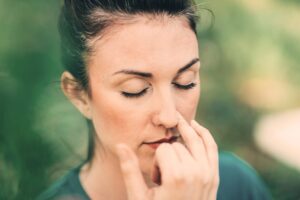
‘Surya’ means Sun & ‘Bhedana’ means Piercing.
It’s also called Right nostril breathing. Surya Bhedana pranayama let sun energy enters our body. In yogic science, the right nostril is considered the entrance of solar energy while the left nostril is of moon energy. Learn how to do Surya Bhedana, Beginner steps with benefits.
2. Sitkari

Sitkari means sipping sound.
The sound produced in sitkari pranayama letting fresh air enters through our mouth while our teeth closed. Sitkari pranayama can be practiced after asana practice & in hot weather to cool down body temperature & relax the mind. Learn how to do Sitkari, Beginner steps with benefits.
3. Sitali
4. Bhramari
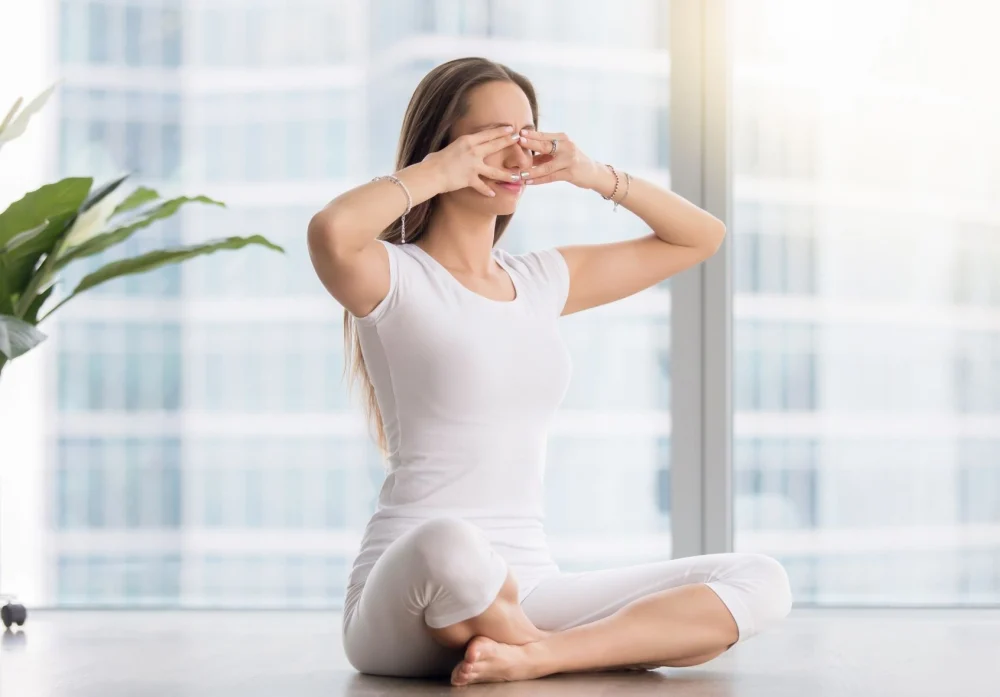
Bhramari is the humming sound of a bee.
Exhalation in bhramari pranayama is done with the ‘hmm’ sound introduced from the back of the throat. Learn how to do Bhramari, Beginner steps with benefits.
5. Bhastrika

6. Murcha
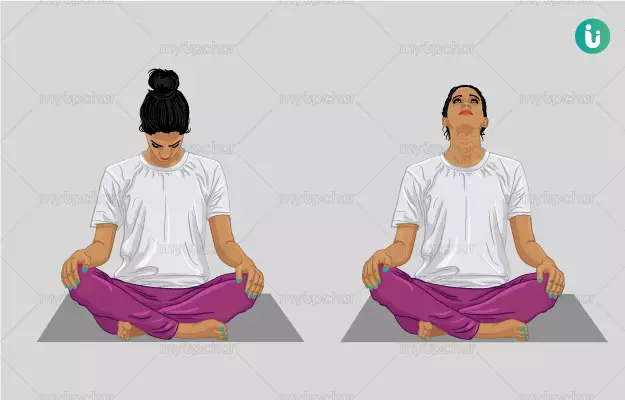
Murcha means faint.
In this pranayama, the practitioner holds the breath for a prolonged period while the chin is locked near the thyroid gland. Breath held until the practitioner reaches a state of almost fainting. Learn how to do Murcha, Beginner steps with benefits.
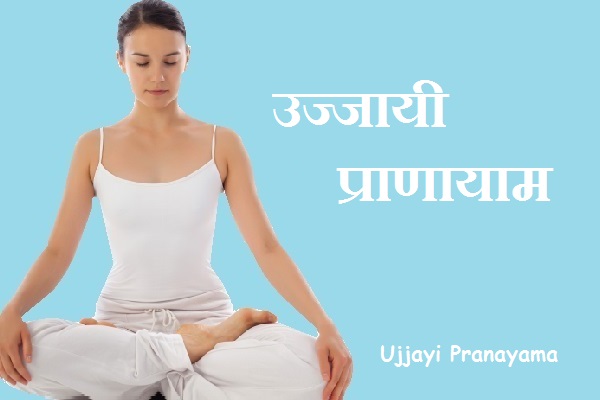
7. Ujjayi
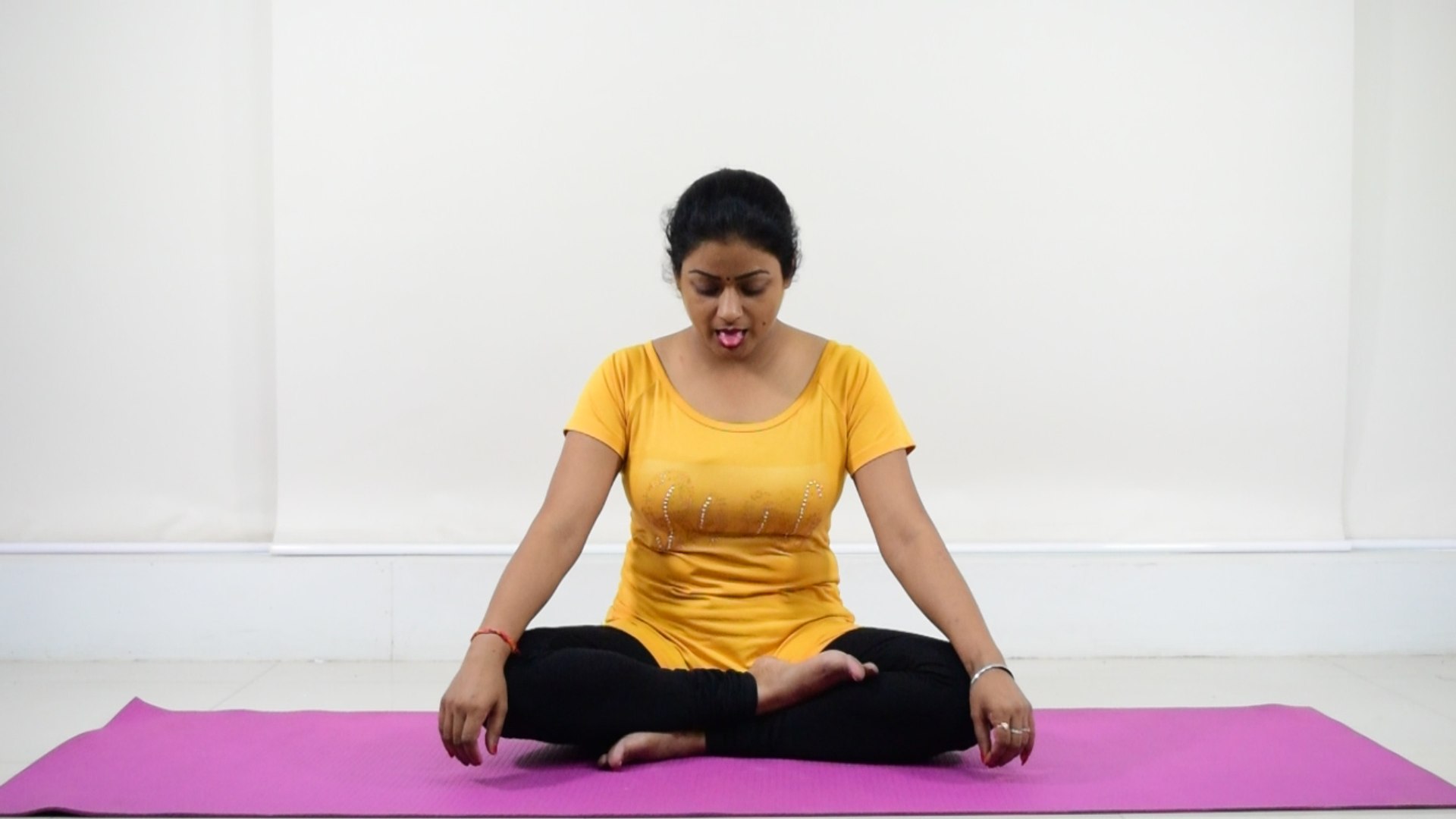
8. Plavini
Benefits of Pranayama
The practice of regulating the breath could have a great healing effect on the body. Pranayama has a lot of benefits which science has proven. I have now published a research article on 14 scientific Benefits of Pranayama. You can also read my article on 46 scientifically proven benefits of yoga.
In this article, I have mentioned scientifically proven,
- Physical benefits of Pranayama (ex. weight loss, glowing skin, Maintaining lungs, immunity boost, etc)
- Benefits of Pranayama for the brain (ex. concentration improvement, sleep disorders, stress reliever, increases grey matter, etc )
- Spiritual Benefits of Pranayama (ex. grow spiritually, enhances clairvoyance & sixth sense, etc )
Yoga – The natural immunity booster
When sick, antibiotics and other medicine can help the body recover from the disease. However, what medicine fails to do is improve the body’s immune system. This is where yoga comes to the rescue! Yoga is one of the most effective and time-tested natural immunity boosters that can lead to a healthy, sickness-free body. Yoga lowers stress hormones and strengthens the nervous system while also stimulating the lymphatic system, which removes toxins from the body. Yoga calms the mind and can contribute to deeper, regulated sleep, which is crucial for wellness; sleep is one of the most important factors in healing and maintaining a healthy immune system.
Shishuasana ( Child Pose)
Shishuasana is an excellent pose to decongest the chest and relax the mind.
Setu Bandhasana opens the heart and improves blood circulation, increasing energy in the body.
Helps relieve the symptoms of menopause and menstrual pain. Helpful in asthma, high blood pressure, osteoporosis, and sinusitis
- To begin, lie on your back.
- Fold your knees and keep your feet hip-distance apart on the floor, 10-12 inches from your pelvis, with knees and ankles in a straight line.
- Keep your arms beside your body, palms facing down.
- Inhaling, slowly lift your lower back, middle back, and upper back off the floor; gently roll in the shoulders; touch the chest to the chin without bringing the chin down, supporting your weight with your shoulders, arms, and feet. Feel your bottom firm up in this pose. Both the thighs are parallel to each other and to the floor.
- If you wish, you could interlace the fingers and push the hands on the floor to lift the torso a little more up, or you could support your back with your palms.
- Keep breathing easily.
- Hold the posture for a minute or two and exhale as you gently release the pose.
Halasana (Plow Pose)
stimulates the thyroid gland, strengthening the nervous system. It is one of the best asanas to tackle obesity. By revitalizing the internal organs, it can cure indigestion, constipation, and neck stiffness.
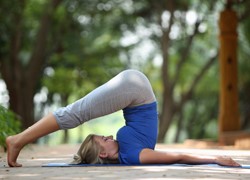
- Lie on your back with your arms beside you, palms downwards.
- As you inhale, use your abdominal muscles to lift your feet off the floor, raising your legs vertically at a 90-degree angle.
- Continue to breathe normally and support your hips and back with your hands, lift them off the ground.
- Allow your legs to sweep at a 180-degree angle over your head till your toes touch the floor. Your back should be perpendicular to the floor. This may be difficult initially, but make an attempt for a few seconds.
- Hold this pose and let your body relax more and more with each steady breath.
- After about a minute (a few seconds for beginners) of resting in this pose, you may gently bring your legs down on exhalation.
Benefits:
- Strengthens and opens up the neck, shoulders, abs, and back muscles.
- Calms the nervous system, reduces stress and fatigue.
- Tones the legs and improves leg flexibility.
- Stimulates the thyroid gland and strengthens the immune system
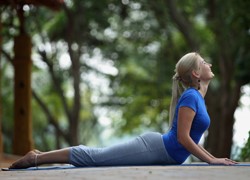
This Asana helps to stretch muscles in the shoulders, chest, and abdomen. · It decreases the stiffness of the lower back, and it strengthens the arms and shoulders. Improves digestion, strengthens the spinal cord. Talking about the major benefits of Bhujangasana, the main effect of this asana is on the abdominal muscles and spinal cord. Along with this, there is a proper flow of blood in the body, and menstrual irregularities end. It relaxes the pelvic region.
- Lie down on your stomach with your toes flat on the floor, soles facing upwards; rest your forehead on the ground.
- Keep your legs close together, with your feet and heels lightly touching each other.
- Place both hands in such a way that palms are touching ground under your shoulders, elbows should be parallel and close to your torso.
- Taking a deep breath in, slowly lift your head, chest and abdomen. Keep your navel on the floor.
- Pull your torso back and off the floor with the support of your hands. Make sure that you are putting equal pressure on both the palms.
- Keep breathing with awareness, as you curve your spine, vertebra by vertebra. If possible, straighten your arms by arching your back as much as possible; tilt your head back and look up.
- Maintain the pose while breathing evenly for 4-5 breaths.
- Now, breathe out, gently bring your abdomen, chest, and head back to the floor and relax.
Dhanurasana (Bow pose)
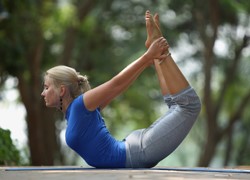
It can be a great asana for people with lower back pains as it strengthens the back muscles. It relieves menstrual problems by stretching the uterus and ovaries. It releases stress through invigorating adrenal glands and kidneys.
Begin the bow pose by lying on your stomach with your arms at your side and your palms facing up. Keep your knees hip-width apart.
Slightly raise your upper body off the floor by lifting your head and pinching your shoulder blades together. Bend your knees and press your feet together, bringing your feet as close to your buttocks as possible. Use both hands to reach back and grab the outside of your ankles. Avoid grabbing the tops of your feet.
After you’ve grabbed your ankles, lift your heels while also lifting your thighs away from the floor, which should raise your head and upper torso.
As you’re grabbing your ankles, push your tailbone into the floor, keep your back muscles relaxed, and hold the position for 15 to 30 seconds
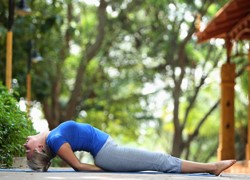
Improve blood circulation in the head. Very good for upper back and hair fall. Relieves tension in neck throat and shoulder.
- Lie on your back. Your feet are together and your hands are relaxed alongside the body.
- Place the hands underneath the hips, palms facing down. Bring the elbows closer toward each other.
- Breathing in, lift the head and chest up.
- Keeping the chest elevated, lower the head backward and touch the top of the head to the floor.
- With the head lightly touching the floor, press the elbows firmly into the ground, placing the weight on the elbow and not on the head. Lift your chest up from in-between the shoulder blades. Press the thighs and legs to the floor.
- Hold the pose for as long as you comfortably can, taking gentle long breaths in and out. Relax in the posture with every exhalation.
- Now lift the head up, lowering the chest and head to the floor. Bring the hands back along the sides of the body. Relax.
Sarvangasana (Shoulder stand)
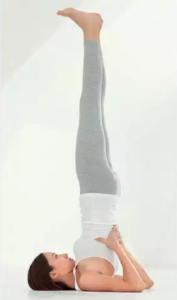
- Lie on your back with hands by your side.
- With one movement, lift your legs, buttocks, and back so that you come up high on your shoulders. Support your back with your hands.
- Move your elbows closer towards each other, and move your hands along your back, creeping up towards the shoulder blades. Keep straightening the legs and spine by pressing the elbows down to the floor and hands into the back. Your weight should be supported on your shoulders and upper arms and not on your head and neck.
- Keep the legs firm. Lift your heels higher as though you are putting a footprint on the ceiling. Bring the big toes straight over the nose. Now point the toes up. Pay attention to your neck. Do not press the neck into the floor. Instead, keep the neck strong with a feeling of tightening the neck muscles slightly. Press your sternum toward the chin. If you feel any strain in the neck, come out of the posture.
- Keep breathing deeply and stay in the posture for 30-60 seconds.
- To come out of the posture, lower the knees to the forehead. Bring your hands to the floor, palms facing down. Without lifting the head slowly bring your spine down, vertebra by vertebra, completely to the floor. Lower the legs to the floor. Relax for a minimum of 60 seconds.
- Benefits: Stimulates the thyroid and parathyroid glands and normalizes their functions
- Strengthens the arms and shoulders and keeps the spine flexible
- Nourishes the brain with more blood. Very good asana for preventing hair fall.
- Stretches the heart muscles by returning more venous blood to the heart
- Brings relief from constipation, indigestion, and varicose veins
Nauka Asana
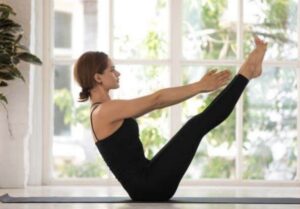
This asana stretches the abdominal muscles and it improves digestion and reduces belly fat. It is good to improve the efficiency of abdominal muscles. Very good asana for a hernia. Also useful for strengthening pelvic floor muscles hence benefits sexual disorders. For sexual dysfunction, it is combined with Setubandh asana and sarvang asana.
- Lie on your back with your feet together and arms beside your body.
- Take a deep breath in and as you exhale, lift your chest and feet off the ground, stretching your arms towards your feet.
- Your eyes, fingers, and toes should be in a line.
- Feel the tension in your navel area as the abdominal muscles contract.
- Keep breathing deeply and easily while maintaining the pose.
- As you exhale, come back to the ground slowly and relax.
Pawanmuktasana
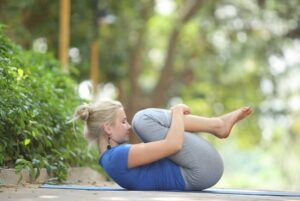
By doing the Pavanamuktasana posture, all the problems of the stomach are removed and help in the balance of hormones. Pawanmuktasana is also beneficial in yogasanas that remove ovarian cysts.
Lie on the ground on your back. Now slowly raise both your legs upwards and bend them from the knees and put them on the chest. With the help of both hands, hold both feet tightly. Now raise the neck slowly and touch it with the knee. After that come back to your normal position.
Surya Namaskar
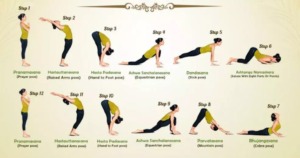
One Yoga with many benefits is Salutation to Sun or Surya Namaskar
Surya Namaskar or Sun Salutation is an ancient technique of paying respects to the sun. Constituting 12 different postures is a form of expressing gratitude to this source of all life on earth. Ancient Indian sages have said different energies govern different parts of the body. For instance, the solar plexus that is located behind the navel is connected to the Sun. Regular practice of Surya Namaskar enhances the size of the solar plexus. This, in turn, increases your creativity, intuitive abilities, decision-making, confidence, and leadership skills. This is why the practice of Surya Namaskar is highly recommended.
The benefits of Surya Namaskar are manifold. It helps in the better functioning of the body and mental faculties. It is very useful for skin and hair.
- Surya Namaskar improves blood circulation to all parts of the body, thus keeping the skin young
- It increases energy and vitality, thereby making your face glow with radiance. This helps the skin retain its firmness.
- Surya Namaskar prevents the onset of wrinkles by relieving the body and mind of stress.
- Surya Namaskar improves blood circulation to the scalp, thereby preventing hair loss.
- The increased blood circulation nourishes the head and enables healthy hair growth.
- Different poses help prevent graying of hair.
- Improves blood circulation.
- Strengthens the heart.
- Tones the digestive tract.
- Stimulates abdominal muscles, respiratory system, lymphatic system, spinal nerves, and other internal organs.
- Tones the spine, neck, shoulder, arms, hands, wrist, back, and leg muscles, thereby promoting overall flexibility.
Yoga for Diabetes
Diabetes is a chronic disease that occurs either when the pancreas does not produce enough insulin or when the body cannot effectively use the insulin it produces. Insulin is a hormone that regulates blood sugar.
Diabetes is one of the most prevalent diseases in the world. It has been projected that worldwide approximately 300 million people would be afflicted with it by 2025. In India, about 50.9 million people suffer from diabetes, and this figure is likely to go up to 80 million by 2025, making it the ‘Diabetes Capital of the world.
Type 2 diabetes has become a leading public health issue globally and is one of the leading causes of death and disability across the world because of various complications caused by diabetes like heart disease, kidney disease, Complications in eyes leading to blindness, Diabetic foot ulcer leading to amputation and sexual dysfunction.
The results of one 2016 review found that yogic practices can significantly help to manage type 2 diabetes. Researchers concluded that yoga had a positive improvement in blood sugar levels, lipid levels, and body composition.
Here are a few specific asanas to tackle diabetes better:
- Kapal Bhati (Skull Shining breathing technique)
- Supta Matsyendrasana (Lying-down body twist)
- Dhanurasana (Bow pose)
- Paschimottanasana (Seated forward bend)
- Ardhya Matsyendrasana (Sitting half spinal twist)
- Shavasana (Corpse Pose)
- Manduka Asana
Manduk Asana: Most of us strive for a well-shaped and toned abdomen. It is a sign of great body and health. Also, for diabetic people, there are many yogic postures that are recommended. To get a great abdominal region and control diabetes, Mandukasana or Frog Pose is an excellent yoga pose. It tones the entire abdominal region and tones the organs in this region. Mandukasana, in Sanskrit, means, Manduk which stands for Frog, and Asana which stands for Pose. In the final position of this asana, the posture of the practitioner resembles a frog. This asana has various variations and owing to this, we have mentioned how to practice this asana along with its benefits.
How To Do Mandukasana
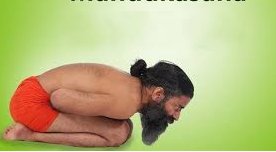
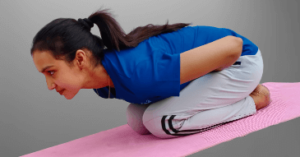
- First, you need to sit in Vajrasana which is also known as the thunderbolt pose. It is a simple kneeling pose.
- Now, with your hands, make a fist with the thumb tucked well inside your four fingers.
- Place your fists on the abdomen region on both sides of your navel.
- Now exhale and start pulling the abdomen inside slightly. After this, bend forward slowly and start pressing the navel with your fists.
- Keep your back as straight you can get, and keep looking forward in your bend position.
- Now keep the breath well outside in this pose and maintain it for a period of time that is comfortable for you.
- Now to release this pose, inhale and then slowly raise your trunk up to the kneeling pose and bring your hands back to your sides and then relax.
- Repeat this process 4-5 times.
Benefits :
- It tones all of the organs that are situated in the abdominal region which also includes the stomach.
- It improves the pancreas and is quite beneficial for people suffering from diabetes.
- It also helps in relieving constipation.
- It also helps in reducing the extra belly fat along with extra fat on the waist as well as thighs, hence helping in reducing weight.
- It improves excretory as well as digestive functions.
- It provides a good stretch to the muscles of the back.
- It helps in relieving the pain in the legs, knees, and ankles.
Half Spinal Twist (Ardha Matsyendrasana)
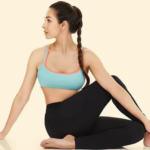
- Sit up with the legs stretched out straight in front of you, keeping the feet together and the spine erect.
- Bend the left leg and place the heel of the left foot beside the right hip (optionally, you can keep the left leg straight).
- Take the right leg over the left knee.
- Place the left hand on the right knee and the right hand behind you.
- Twist the waist, shoulders and neck in this sequence to the right and look over the right shoulder.
- Keep the spine erect.
- Hold and continue with gentle long breaths in and out.
- Breathing out, release the right hand first (the hand behind you), release the waist, then chest, lastly the neck and sit up relaxed yet straight.
- Repeat to the other side.
- Breathe out, come back to the front, and relax.
Paschimottanasana (forward bend)
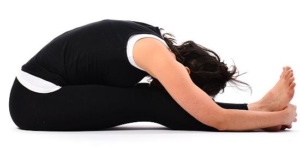
Paschimottanasana is a simple and traditional Hatha Yoga Asana. That has many tremendous health benefits. The Forward bend covers up whole systems in your body along with very beneficial for growing kids to increase their height. Those People who are suffering from High B.P. or diabetes get awesome health benefits from Paschimottanasana.
- Sit up with the legs stretched out straight in front of you, keeping the spine erect and toes flexed toward you.
- Breathing in, raise both arms above your head and stretch up.
- Breathing out, bending forward from the hip joints, chin moving toward the toes. Keep the spine erect focusing on moving forwards towards the toes, rather than down towards the knees.
- Place your hands on your legs, wherever they reach, without forcing. If you can, take hold of your toes and pull on them to help you go forward.
- Breathing in, lifting your head slightly, and lengthen your spine.
- Breathing out, gently move the navel towards the knees.
- Repeat this movement two or three times.
- Drop your head down and breathe deeply for 20-60 seconds.
- Stretch the arms out in front of you.
- Breathing in, with the strength of your arms, come back up to the sitting position.
- Breathe out and lower the arms.
- Shavasana ( Corpse Pose)
- Lie flat on your back, preferably without any props or cushions. Use a small pillow below your neck if absolutely required. Close your eyes.
- Keep your legs comfortable apart and let your feet and knees relax completely, toes facing to the sides.
- Place your arms alongside, yet a little spread apart from your body. Leave your palms open, facing upward.
- Taking your attention to different body parts one by one, slowly relax your entire body.
- Begin with bringing your awareness to the right foot, move on to the right knee (as you complete one leg, move your attention on to the other leg), and so on, and slowly move upwards to your head, relaxing each part of the body.
- Keep breathing slowly, gently, deeply, and allow your breath to relax you more and more. The incoming breath energizes the body while the outgoing breath brings relaxation. Drop all sense of hurry or urgency or any need to attend to anything else. Just be with the body and the breath. Surrender the whole body to the floor and let go. Make sure you don’t fall asleep!
- After some time, about 10-20minutes when you feel fully relaxed, keeping your eyes closed, slowly roll onto your right side. Lie in that position for a minute or so. Then, taking the support of your right hand, gently sit up into a seated pose such as Sukhasana (Easy Pose).
- Keep your eyes closed and take a few deep breaths in and out as you gradually become aware of your environment and the body. When you feel complete, slowly and gently open your eyes.
Benefits
- This posture brings a deep, meditative state of rest, which may help in the repair of tissues and cells, and in releasing stress. It also gives time for the yoga workout to sink in at a deeper level.
- This posture leaves you in a state of rejuvenation. It is the perfect way to end a yoga session, particularly if it has been a fast-paced one.
- It helps reduce blood pressure, anxiety, and insomnia.
- This is an excellent way to ground the body and reduce the Vata dosha(imbalance of the air element)